

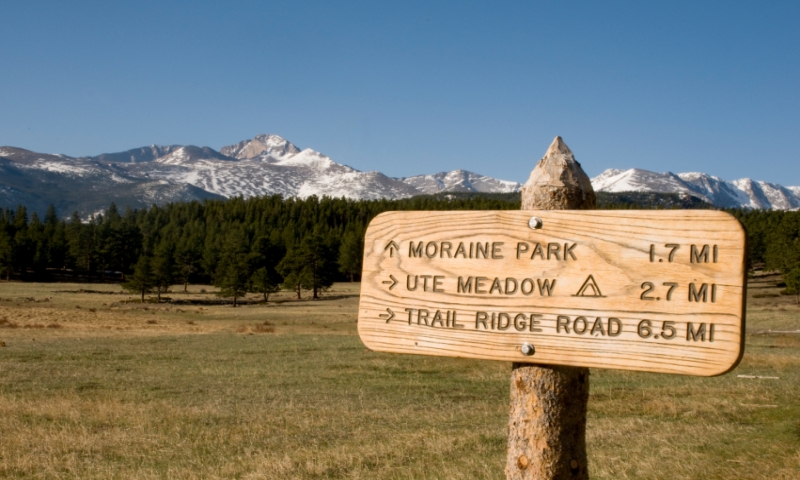


When taking a hike in Rocky Mountain National Park, remember that park elevations span between 7,500 and 12,000 feet. That means treks through the area can be a challenge even for healthy people, mainly because moving from lower elevations to higher ones can be difficult.
Altitude problems may develop, such as headaches, shortness of breath, insomnia, and rapid heartbeat. It can take a few days for your body to make the needed physiological adjustments; full acclimation can take several weeks. To avoid too many symptoms drink a lot of water, stay away from alcohol, eat all meals, and get plenty of rest.
Keeping hydrated is particularly important because as the air gets thinner at higher altitudes there is more water evaporation from the lungs. Drinking plenty of fluids can prevent a bad headache and other symptoms.
Ultraviolet light is also stronger in the mountains as the atmosphere thins out. This makes it easier for sunlight to reach you. Always wear sunscreen, a hat, sunglasses, and long sleeved shirts if you plan to be outside for an extended period of time.